MA XUEJING/CHINA DAILY
Editor's Note: The 宁波同安医院新闻网首页symposium on the Future of China-US Relations was conducted by China Daily's Opinion Channel, the Institute of American Studies of the Chinese Academy of Social Sciences and the Chinese Association of American Studies on Thursday. Several experts from both China and the United States shared their views on the theme. Below are excerpts of their speeches.
Cooperation is the 'why not' moment for China and US
By Siddharth Chatterjee
We face five defining challenges unprecedented in the post-war era.
First, the pandemic has laid bare the fragility of human health and the global systems meant to protect it. Second, we confront a triple planetary crisis: accelerating climate change, catastrophic biodiversity loss, and air pollution. Third, around 80 conflicts are burning across the world simultaneously. Fourth, over 800 million people go to bed hungry every night. Fifth, inequality — digital, economic, and in quality of life — continues to widen, fracturing societies from within.
Yet beneath these crises lies a profound shared truth. A mother in Beijing, Washington, Nairobi, or Denmark holds the same aspirations for her children: better education, adequate nutrition, and a future worth striving for.
For the first time since World War II, over 170 million people have been forcibly displaced — uprooted by conflict, climate breakdown, poor governance, poverty, and despair. Having dedicated three decades to the United Nations, I am more convinced than ever that this moment demands not retreat into rivalry, but a bold convergence of purpose. The Global Development Initiative presents exactly that opportunity — a platform for companies and governments from the United States, China, and Europe to come together and catalyze transformation across Africa and beyond.
The potential is boundless, constrained only by imagination. Consider a powerful historical precedent: during the Cold War, the United States and the Soviet Union, despite their enmity, both contributed to global efforts that eradicated smallpox. If scientists from the US, China, Germany, India, and Russia can work in concert today, there is no reason we could not develop vaccines capable of preventing the next pandemic before it begins.
The Sino-American relationship remains the single most consequential bilateral relationship of the 21st century. It carries within it the capacity to address global challenges that touch every human life on earth. I say this not as an American, not as a Chinese citizen, but as a global citizen shaped by thirty years of frontline multilateral service in the United Nations.
The architecture for cooperation already exists. If the US and China were to align the Build Back Better framework with China's Global Development Initiative and Global Civilization Initiative — two ambitious visions with more common ground than either side cares to admit — the transformative potential would be extraordinary.
So why not?
Why not see these parallel ambitions converge into a shared project for humanity? George Bernard Shaw put it best: Some men see things as they are and ask why. Others dream things that never were and ask why not.
This is that "why not" moment — for China, for the United States, and for the world.
Summit helps to strengthen responsible major-power relations
By Fred Teng
The May 14 Beijing meeting between the two heads of state represents a serious attempt to move China-US relations from confrontation management to strategic stability.
Confrontation can lead to uncertainties and severe repercussions, with farmers, students, researchers, manufacturers, and consumers all paying the price.
That is why this summit matters.
A "constructive China-US relationship of strategic stability" does not mean the two countries agree on everything — they clearly do not — but that they recognize that unmanaged rivalry is dangerous.
The goal is not to eliminate competition but to discipline it.
There are five important outcomes of the summit.
First, trade and tariffs. The reported extension of the tariff truce sends a direct signal to the markets. Politicized tariffs have become weapons triggering higher costs, disrupting supply chains and damaging confidence.
Easing tariffs, especially on agricultural products, supports US farmers, helps Chinese importers and consumers and reduces one of the most visible sources of economic friction.
Second, institutional mechanisms. The proposed economic, trade and investment review channels matter because they replace sudden escalation with structured negotiation.
A mechanism does not solve every dispute, but it creates space to talk before disputes become crises. That is how serious great-power relations must be managed.
Third, technology. This remains the hardest area.
High-end AI chips, advanced lithography machines, and military-related technologies might remain restricted.
But the reported easing of certain mid-range chips and equipment restrictions suggests a more practical distinction between strategic technology and normal commercial technology.
That distinction is essential to avoid a technological Cold War, from which neither country benefits.
Fourth, people-to-people exchanges. This may be the most overlooked achievement.
Visas, flights, students, scholars, businesspeople and tourists are not side issues.
They are the human foundation of the relationship. Restoring direct flights and longer-term visas is not symbolic but practical diplomacy to foster trust.
Fifth, crisis management. Restarting fentanyl-related law enforcement cooperation moves the issue from accusation to action.
Restoring military communication channels helps reduce the risk of miscalculation in the South China Sea and the Taiwan Strait.
Hotlines are not signs of weakness but signs of strategic maturity.
Of course, this is not a full reset. But diplomacy should not be judged only by whether it solves everything.
It should also be judged by whether it prevents the worst outcomes.
The real choice before China and the US is not friendship or confrontation but managed competition or unmanaged rivalry.
If these understandings reached in Beijing are implemented seriously, this summit may mark an important step toward stability, predictability, and responsible major-power relations.
And in today's world, that is a major advance.
Beijing summit matters more than immediate headlines
By Einar Tangen
For years, the dominant assumption surrounding US-China relations was that deterioration had become irreversible and the world's two largest economies were drifting toward a modern version of the Thucydides Trap, the historical pattern where rising and established powers slide into conflict.
Yet what unfolded in Beijing last week may force us to reconsider that assumption.
The easy interpretation is to dismiss the summit between the two heads of state as just optics: Washington received Boeing headlines and export announcements and Beijing gained goodwill while projecting confidence and stability.
But the reactions afterward suggest something more substantial may be emerging — the outline of a "grand bargain", a strategic understanding where both sides continue competing, but within mutually recognized limits designed to avoid systemic rupture.
The agreement to define a "constructive China-US relationship of strategic stability" reflects concepts that Beijing has pursued for years: managed competition, coexistence, and recognition that neither side can eliminate the other from the international system.
For China, stability is the prerequisite for peace and progress.
The appeal of a broader bargain also exists on the US side, especially for the Donald Trump administration.
A grand bargain with China offers it the ability to reframe its policy as the mechanism that produced peace and strategic advantage — reduced tensions between the world's two largest economies, expanded US exports to China, and stabilized global supply chains.
This explains why the Beijing summit may matter far more than the immediate headlines suggest.
The deeper issue is whether Washington and Beijing are beginning to accept a common reality — that neither side can achieve absolute dominance without imposing catastrophic costs on itself and the world; that China is not collapsing; and that the US remains indispensable to global finance, technology, consumption, and security architecture.
And most importantly, both countries now require stability more than escalation.
If Beijing and Washington are now exploring ways to manage global strain together rather than intensify it, historians may eventually look back at this summit very differently from the way contemporary commentators initially framed it.
Truly seismic shifts in geopolitics rarely announce themselves clearly and more often first appear as optics.
Peoples' bonds timeless pillar for Sino-US ties
By Zhao Mei
At an international symposium commemorating the victory in the World Anti-Fascist War late last year, I spoke about the Flying Tigers, General Joseph Stilwell, and the rescue of the Doolittle Raiders.
The United States moderator, with tears in her eyes, added that her father was one of the US pilots rescued by Chinese soldiers and civilians.
The attendees were deeply moved by this heartfelt bond between the Chinese and US people.
The friendship across the Pacific spans over two centuries.
In 1784, the US merchant ship Empress of China arrived in Guangzhou, initiating the first exchange.
In 1879, Ge Kunhua, a scholar from the late Qing Dynasty, taught the Chinese language at Harvard University.
In 1901, a Chinese laborer named Dean Lung donated $12,000 to support the establishment of East Asian Studies at Columbia University.
Among the Chinese students studying in the US, Zhou Peiyuan, Zhu Kezhen, Qian Xuesen, Qian Weichang, and Liang Sicheng made significant contributions to the development of science, education and culture in China.
Richard Sears, known as "Uncle Hanzi", founded the website named Chinese Etymology, which now features nearly 100,000 ancient Chinese character forms.
The website has ignited a passion for learning Chinese characters and culture among many foreigners.
Such "cultural ambassadors" have made significant contributions to enhancing mutual understanding and learning between the two civilizations.
Since the establishment of diplomatic relations between China and the US, Sino-US relations have weathered twists and turns but have generally remained stable.
Throughout this period, people-to-people exchanges have been a crucial pillar supporting the steady development of the bilateral relationship.
However, since 2018, headwinds have emerged, causing more than 100 dialogue and exchange mechanisms to largely come to a halt.
The number of students studying in both countries has also declined.
In April 2024, a US newspaper warned that the decrease in US students in China could result in a lost generation of China experts in the US.
History shows that mutual engagement between the Chinese and US people has repeatedly helped the bilateral relationship overcome its low points.
In 1971, ping-pong diplomacy broke the ice of estrangement.
In 1979, Deng Xiaoping, then Chinese leader, attended a welcoming event hosted by the US side, where he warmly interacted with US children singing a Chinese song, an exchange that was met with applause and was hailed as an iconic moment in China-US relations.
Today, dialogue, exchanges, and cooperation continue to provide a steady stream of positive energy for deepening mutual understanding and promoting the healthy development of the bilateral relationship in a complex international landscape.
After the establishment of diplomatic relations in 1979, the United States and China built one of the world's largest bilateral scientific and educational relationships.
The 1979 US-China Science and Technology Cooperation Agreement became one of the most important scientific partnerships in modern history and provided the institutional foundation for decades of collaboration.
At the same time, educational exchanges exploded.
Hundreds of thousands of Chinese students studied in the US, while thousands of US students studied in China.
Joint research programs connected universities, laboratories, companies and government agencies.
This relationship accelerated China's modernization, strengthened US universities and research labs, increased scientific productivity globally, and created deep people-to-people ties between the two societies.
For nearly four decades, scientific collaboration and educational exchanges remained among the most stabilizing and constructive dimensions of the US-China relationship. The benefits were real and mutual.
Chinese students and scholars became deeply integrated into the US innovation system.
Many remained in the US and contributed significantly to the development of US universities, Silicon Valley, biotechnology, semiconductors and entrepreneurship.
At the same time, Chinese students returning home helped build China's research universities, technology sector, AI ecosystem, and industrial innovation capacity.
The relationship was never a one-way transfer of knowledge. Instead, it became an interdependent innovation ecosystem. However, since roughly the late 2010s, the relationship has shifted.
Mutual concerns of both countries have led to declining trust, reduced institutional cooperation, greater scrutiny of researchers and the fragmentation of global science networks.
Concerns emerged in Washington over issues such as intellectual property protection, technology transfer, export controls and dependency in critical technologies as policymakers concluded that advanced technologies could no longer be separated from national security considerations.
China, in turn, became concerned about technological containment, semiconductor restrictions, visa scrutiny, limitations on academic collaboration, and barriers to accessing US research ecosystems.
A realistic assessment suggests that the era of broad, optimistic engagement is over.
The future of US-China scientific relations is unlikely to return to the openness of the 1990s or 2000s.
But a complete scientific divorce is neither realistic nor desirable. It will be defined by how successfully the two countries manage a difficult coexistence.
I remain cautiously optimistic about the future. Strategic competition in science and technology may continue for years to come.
Yet history also shows that scientific collaboration and educational exchange can create channels of communication and reduce misperceptions even during periods of geopolitical rivalry.
The central challenge for both countries is whether they can protect legitimate national security interests while preserving enough openness to sustain innovation, academic inquiry, and global problem-solving.
The stakes are not simply bilateral but global.
希望以上内容对您有帮助。


 腾讯视频《奋斗吧人生
 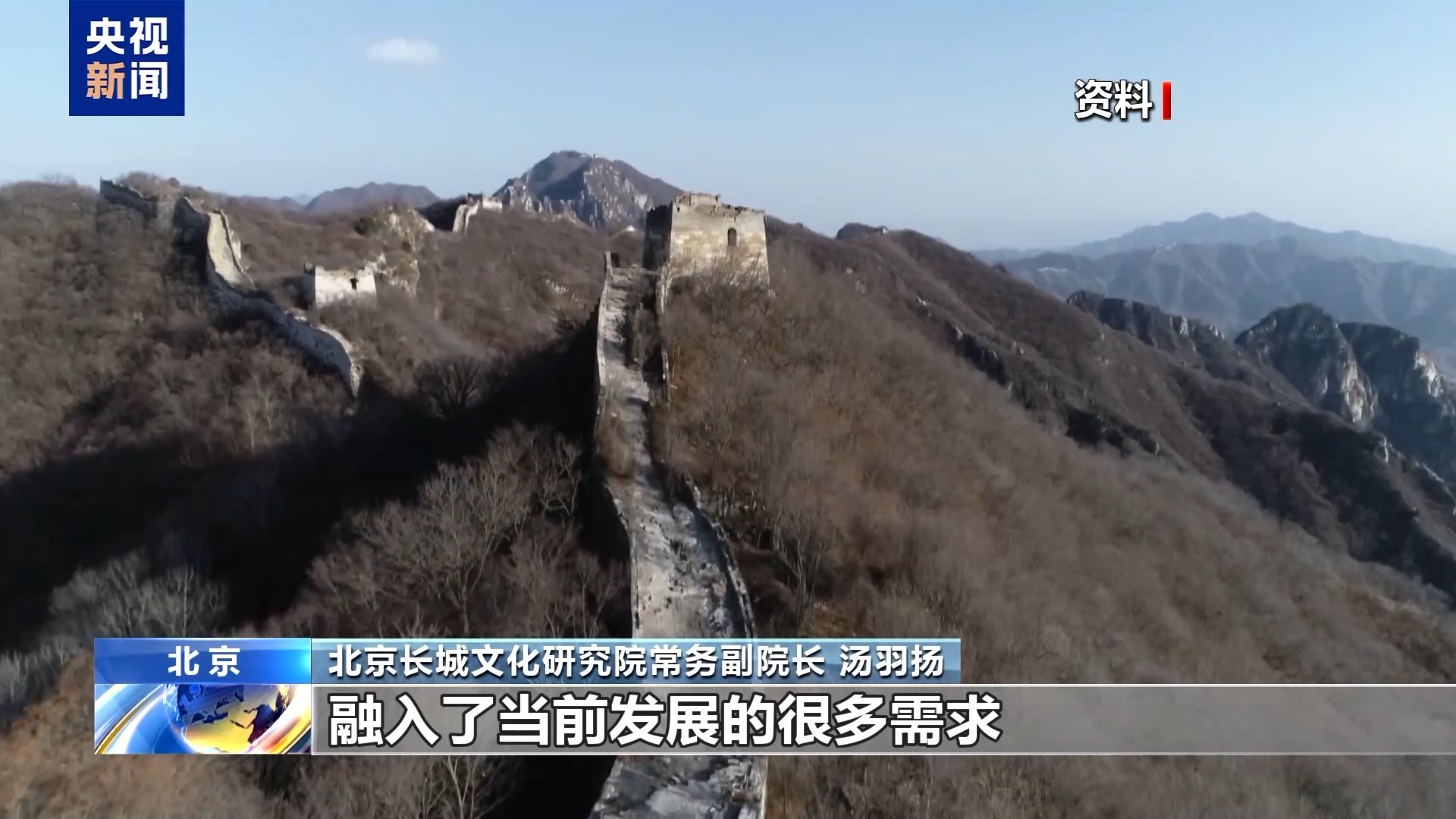 不只护墙 还要护景 北京市长城保护升级
  策马太平年,一起来看非遗“东坝大马灯”
  练就真本事,敢挑硬担子——武汉“干部素质提升年”各项工作扎实推进
 芜湖孙村镇“文化下乡”进企业同台献演迎新春
 美官员称空袭目的是摧毁伊朗安全体系
  有温度的抵达|从黑土地出发,她带着“新农具”和乡亲们奔向“幸福路”
  美官员:美国对伊朗的空袭正在进行中
  今年前11月全国铁路完成固定资产投资6407亿元